
It Was Persian Gulf, It Is Persian Gulf, It'll Be Persian Gulf
Names are not neutral. They carry history, memory, and legitimacy — which is exactly why the fight over what to call the body of water between Iran and the Arabian Peninsula keeps resurfacing, decade after decade, and why it deserves more than just a shrug.

Names are not neutral. They carry history, memory, and legitimacy, which, is exactly why the fight over what to call the body of water between Iran and the Arabian Peninsula keeps resurfacing, decade after decade, and why it deserves more than just a shrug.
More than two thousand years ago, in the Greek and Roman geography that shaped how the ancient world mapped itself, the waterway running along the southern edge of the old Persian heartland already had a settled name. Strabo, writing around the turn of the millennium, and Ptolemy and Pliny the Elder not long after him, each described it the same way, in whichever language they wrote in: "Persikos Kolpos" in Greek, "Sinus Persicus" in Latin (Encyclopaedia Iranica; Pleiades gazetteer of ancient places, which dates the Greek term to roughly 30 BCE–300 CE; EJIL:Talk). Either way, it meant the same thing. The Persian Gulf.
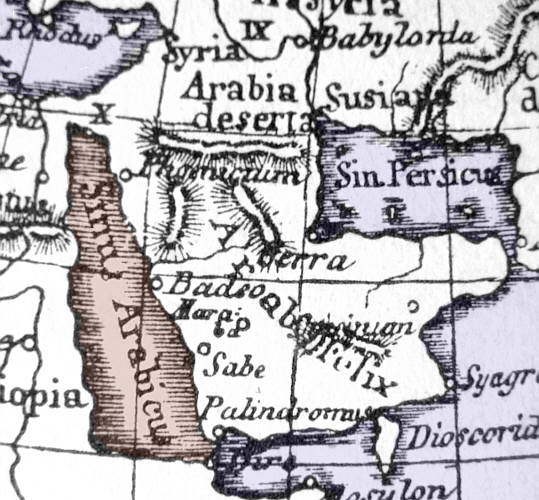

A quick honesty point because I'd rather not hand anyone an easy objection: you'll often see this pushed back another five centuries, to Herodotus. That claim is all over the internet, and I'm deliberately not making it. Herodotus used the term "Erythra Thalassa" (Ἐρυθρὰ Θάλασσα), which translates literally as the "Red Sea". But his usage was broader than ours... he applied it to the entire body of water we now divide into the Red Sea, the Persian Gulf, and the Indian Ocean. There wasn’t really an idea of what might be beyond that. The name possibly derives from the mythical King Erythras rather than the colour... but like a lot of things in the ancient world, who knows? There are very few primary sources and Herodotus oscillates between semi reliable and totally unhinged.
So when he needed to distinguish what we’d call the Red Sea specifically, he'd often referred to it as the "Arabian Gulf" (Ἀράβιος κόλπος), reserving "Erythra Thalassa" for the wider southern ocean.
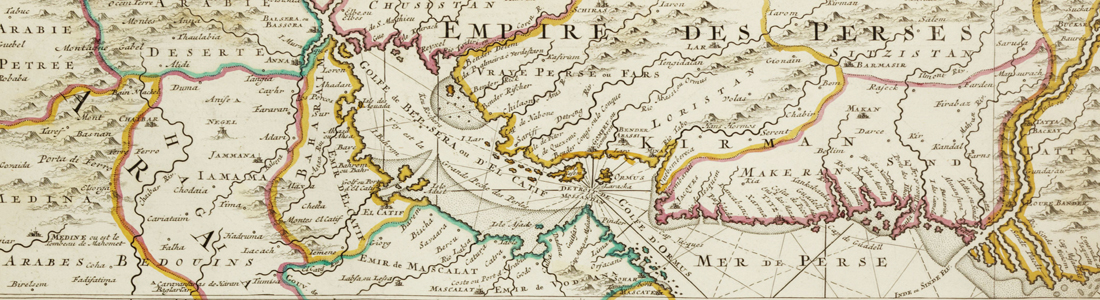
Now back to the topic, That agreement didn't stay confined to a handful of classical writers. Arab historians and geographers of the Islamic era, the 10th-century Christian Arab writer Agapius among them, called it the Persian Gulf in Arabic, "Bahr Fars", writing from the heart of the region itself (Swaen; Wikipedia). When Portuguese, Dutch, and British traders started charting these waters from the 1500s onward, they didn't invent a new tradition either, I quote: "on almost every map printed before 1960, in whatever language, it is the Persian Gulf (Swaen)".
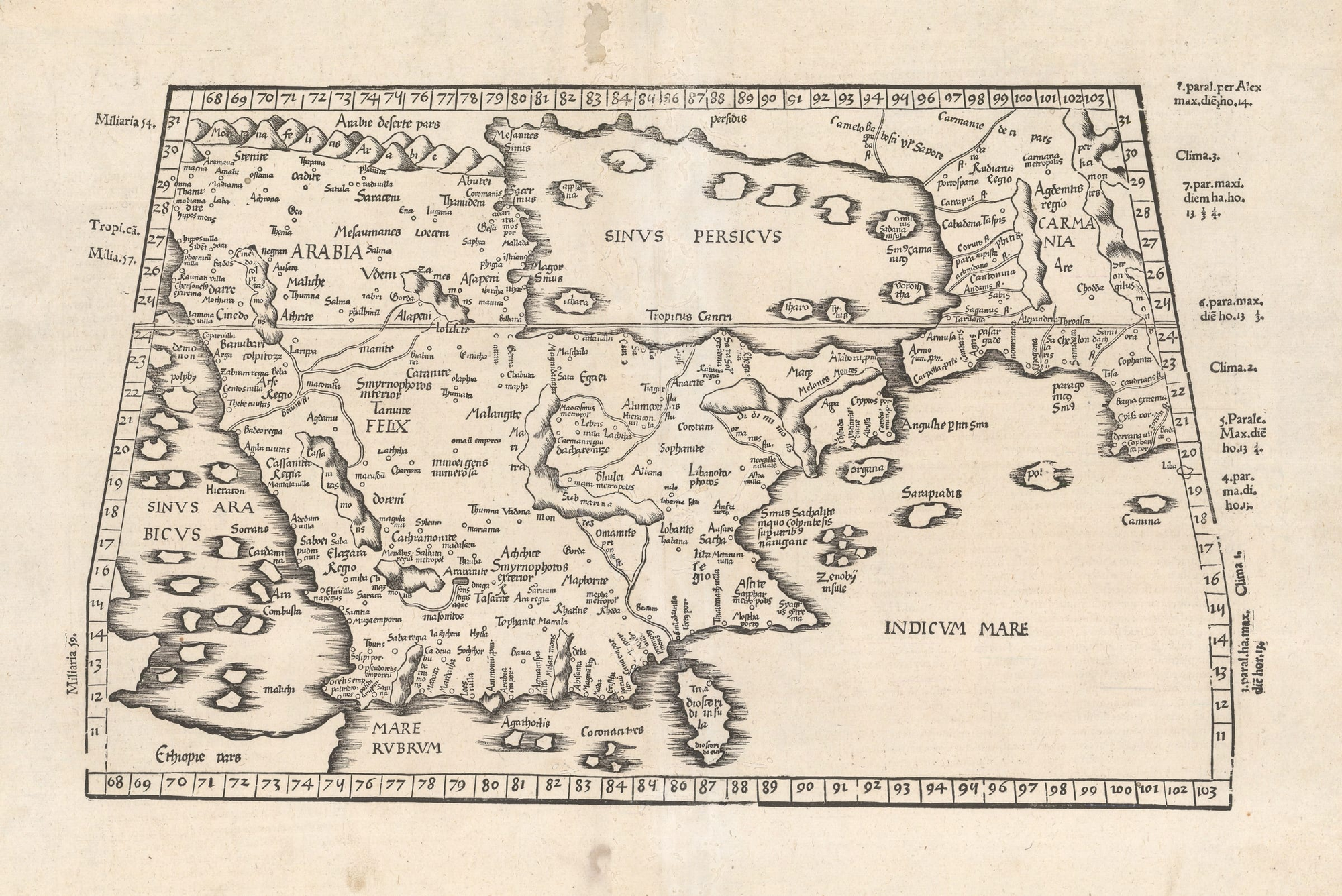
Different languages, different centuries, different empires that in most cases never even overlapped in time, and yet somehow without a treaty, a vote or a shared institution to enforce it, they all wrote down the same name. That's not the kind of coincidence you get to wave away. You'll sometimes see a sharper number attached to this that out of some 6,000 historical maps up to 1890, only three use anything else. Handle that one with care. It comes from a 2006 working paper Iran's delegation submitted to the UN Group of Experts on Geographical Names hosted on the UN's site, which is why it's so often misquoted as a UN finding, but it's Iran's own count. I don't need it. The neutral parties say the same thing in plainer words: a rare-maps dealer with no stake in the fight simply notes that almost all maps before 1960 use "Persian Gulf". Two thousand years of people who never met, never coordinated, and in plenty of cases were actively at war with one another, all describing the same water the same way.
Then, in 1955, a British colonial adviser in Bahrain started calling it something else.

"Arabian Gulf" Has a Birth Certificate
Here's the part that should settle the argument on its own: we know exactly when "Arabian Gulf" was invented, and it wasn't very long ago. Sir Charles Belgrave, British adviser to the ruler of Bahrain, is credited as the first Westerner to use and advocate the name, in a Bahraini journal in 1955 (Swaen; Wikipedia). Two years later, British diplomat Roderic Owen put it into wider English print in his 1957 book The Golden Bubble (EJIL:Talk). The timing was not an accident since pan-Arab nationalism was surging across the region, driven substantially by Gamal Abdel Nasser's Egypt, and through the 1960s Arab governments folded "Arabian Gulf" into their official vocabulary (EJIL:Talk), not because a historical name had been rediscovered, but because a new political identity wanted a name to match it. Today every Gulf Cooperation Council state uses it officially (Middle East Eye).
That's a fundamentally different kind of claim than "Persian Gulf" carries. One side has two thousand years of continuous, cross-cultural documentation, languages and empires that never coordinated with each other and still landed on the same word. The other has roughly seventy years of deliberate political branding, starting with a British colonial adviser's word choice in 1955 and then adopted wholesale by a political movement that wanted a name to match its identity. Those aren't equally weighted alternatives sitting side by side. One is a name that emerged. The other is a rebrand that was launched.
So let me say plainly where that leaves me: it's the Persian Gulf. Not because I'm picking a side in a regional rivalry, but because that's what the record actually shows and the rest of the case only gets stronger from here.
What the People Whose Job Is Naming Things Actually Say
If this were genuinely a coin-flip, you'd expect the international bodies whose entire purpose is naming the world's waters to be split on it. They aren't. Both the United Nations and the International Hydrographic Organization (The organization that exists specifically to standardize maritime names) use "Persian Gulf" (Middle East Eye). The IHO's formal listing is "Gulf of Iran (Persian Gulf)" (Wikipedia). Encyclopaedia Britannica and most serious atlases follow the same line, treating "Arabian Gulf" as an "alternative name" and not a co-equal one.
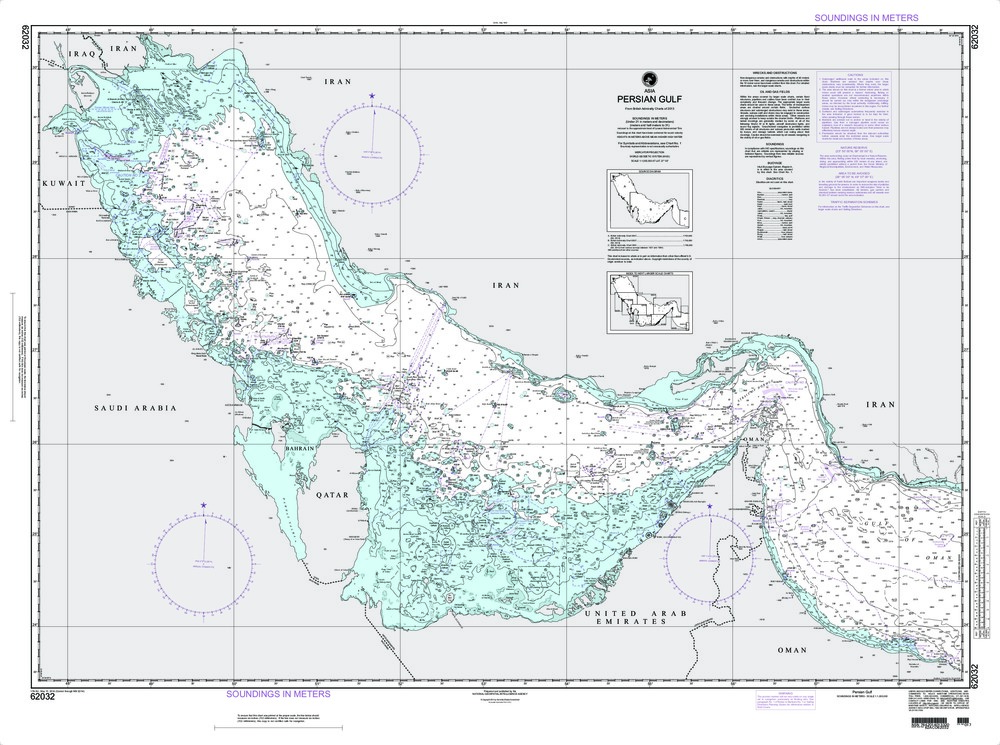
That matters, because it means this isn't just me asserting my preferred name is more legitimate than someone else's. It's the documented position of institutions whose job is specifically to stay neutral on exactly this kind of dispute, and... they still land on Persian Gulf.
Now you don't have to take my word for any of this, it's checkable. The IHO's actual standard, Special Publication S-23 ("Limits of Oceans and Seas"), is published on the organization's own site, and the 3rd edition, from 1953, is still the one in force today. That's not because nobody's gotten around to revising it but because a 4th edition was drafted in 1986 and again in 2002, and both attempts collapsed, in part over exactly this kind of contested naming which was the Sea of Japan/East Sea dispute has stalled IHO revisions the same way (GeoGarage; Wikipedia). The 1953 designation has survived multiple deliberate attempts to overturn it.
You can also see the distinction in plain sight in ordinary reference data. Marine Regions, the marine-geography gazetteer run by the Flanders Marine Institute, lists three English names for the gulf and cites a source for each one. "Persian Gulf" and "Gulf of Iran" are both credited directly to that same 1953 IHO standard. "Arabian Gulf" is credited to GeoNames that is a crowdsourced aggregator that collects names in circulation, not a naming authority. That's the pattern wherever you look closely: the body that actually sets the standard says one thing, and a general-purpose aggregator that hoovers up regional usage says something else.
"But More Arabs Live Along the Coast Now"
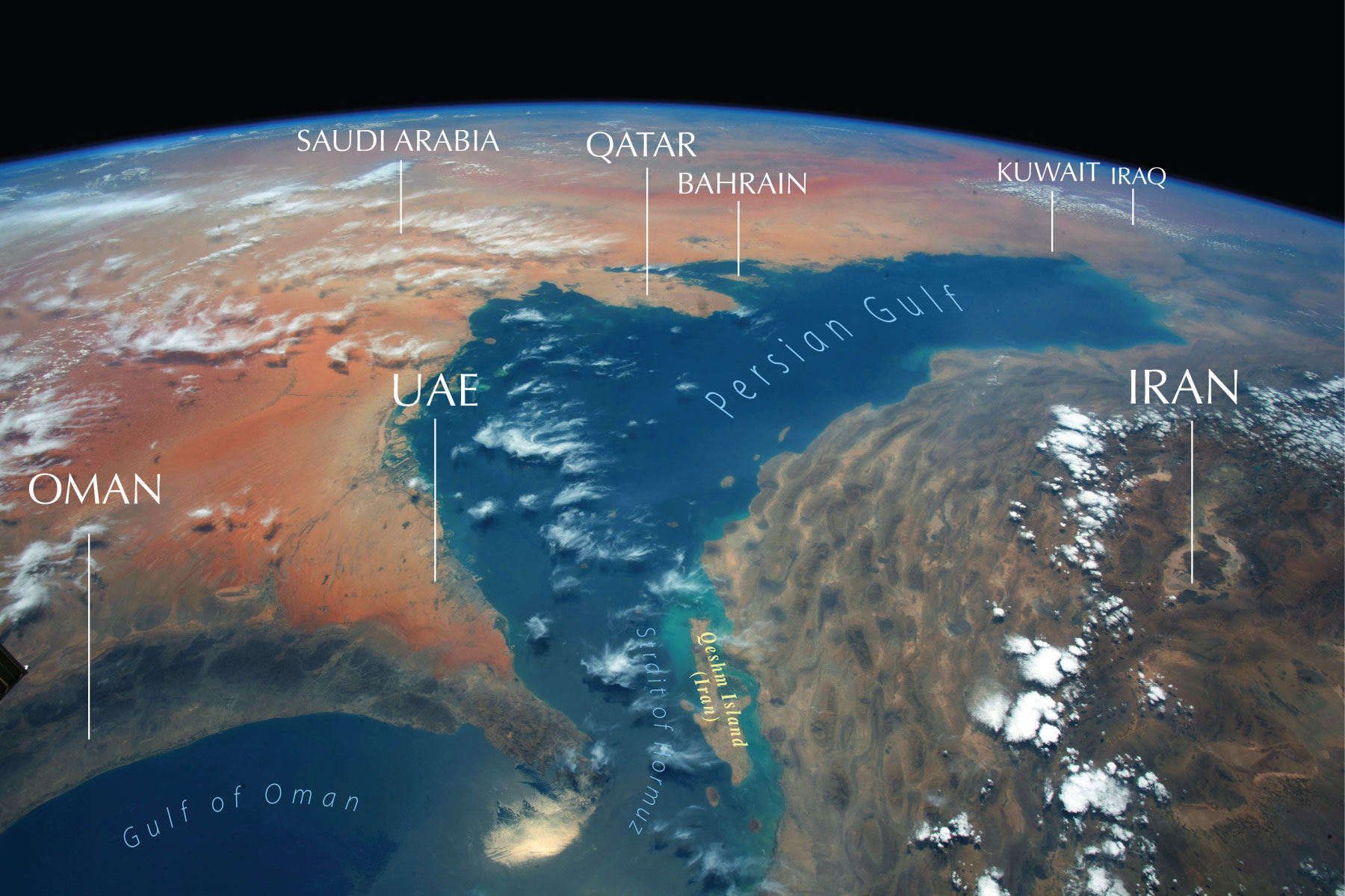
I want to take the other side's actual argument seriously, because it deserves a real answer rather than a dismissal. The case Arab governments make usually isn't historical, it's demographic. More Arabic-speaking people live along the gulf's coastline today, and the Arab coastline is longer than Iran's. So, the argument goes, the name should reflect who's there now (EJIL:Talk).
Here's the problem with that logic: if we accepted it as a general principle, we'd have to rename a huge share of the geographic features on Earth every time regional demographics shifted. The Indian Ocean doesn't get renamed when trade routes change hands. The English Channel doesn't switch names depending on which side has busier ports this century. Geographic names function as a historical record precisely because they're not relitigated every time political or demographic winds shift, and if "who lives nearby right now" became the standard, no historical name anywhere would be safe, including plenty that today's Arab states themselves rely on without controversy.
This Keeps Happening, and That's the Point
If this were purely an academic disagreement, it wouldn't keep boiling over into real, concrete incidents. But it does, repeatedly. In 2010, Iran was set to host the second Islamic Solidarity Games in Tehran, bringing together athletes from 57 nations. The Saudi-based federation running the Games cancelled the entire event rather than allow "Persian Gulf" to appear on the medals and promotional material and Iran, for its part, refused to take the name off (Wikipedia; Gulf News). In 2012, Iran threatened to sue Google after the company chose to leave the waterway unlabeled on its map service rather than commit to either name (Al Jazeera). In 2023, Iran formally protested to Iraq over the branding of the "Arabian Gulf Cup," a regional football tournament (The Times of Israel).
Then, in May 2025, it almost reached the very top of U.S. government policy. U.S. officials briefed reporters that President Trump, fresh off renaming the Gulf of Mexico to the "Gulf of America", was preparing to announce during a trip to Saudi Arabia, Qatar, and the UAE that the U.S. would start calling it the "Arabian Gulf" or "Gulf of Arabia" (CNN; PBS). What happened next says everything about how deep this actually runs. Iran's Foreign Minister called the reported plan a politically motivated, hostile act (Al Jazeera). But so did people who otherwise have essentially nothing in common with Iran's government: His Royal Highness Crown Prince Reza Pahlavi, the exiled son of the last Shah and one of the regime's most prominent opponents, separately condemned it as an affront to Iran's history and civilization (PBS). When a government and its fiercest political opposition agree on something, that's not manufactured outrage, that's a name that means something real to people, independent of what they think of Tehran.
In the end, the change was never formalized (News on Air). The State Department and CIA continue to use "Persian Gulf," even though U.S. Central Command has long used "Arabian Gulf" in its own communications (UPI). But the fact that it got as close as a presidential itinerary shows exactly why this argument isn't over, and why it shouldn't be treated as trivial.
Why This Actually Matters
I'm not writing this because I think a name is worth more than people, or because this is remotely the most important issue facing the region, it isn't. I'm writing it because accuracy is worth defending precisely when it's politically inconvenient, and because there's a bigger principle underneath this specific dispute: if a name with two thousand years of continuous documentation can be swapped out because a political movement decided seventy years ago that it wanted something else, then no historical record is safe from whoever holds the most leverage in a given decade. That should worry anyone who wants history to mean something more than whatever the currently powerful prefer it to mean.
So no, this was never really about a map. It's about whether documented history counts for anything once it becomes politically inconvenient. I think it does. It was the Persian Gulf. It is the Persian Gulf. And no amount of rebranding changes what two thousand years of consistent, independent record already settled.
Sources
- Encyclopaedia Iranica, Persian Gulf i. In Antiquity
- Pleiades (academic gazetteer of the ancient world), Persicus Sinus/Erythr(ae)um Mare
- EJIL:Talk!, Unchanging Waters: Persian Gulf Name Dispute in International Law
- Paulus Swaen Rare Antique Maps, The Persian Gulf naming dispute
- Wikipedia, Persian Gulf naming dispute
- UN Group of Experts on Geographical Names, 23rd session, Working Paper No. 61, submitted by Iran (2006)
- Middle East Eye, Persian or Arabian Gulf? A brief history
- Encyclopaedia Britannica, Persian Gulf
- International Hydrographic Organization, Special Publication S-23, "Limits of Oceans and Seas," 3rd Edition (1953)
- IHO report to UNGEGN, 25th session, Working Paper No. 81 (confirms the 3rd edition remains in force)
- GeoGarage, The naming of seas: the associated problems and their resolutions
- Wikipedia, Limits of Oceans and Seas
- Marine Regions (Flanders Marine Institute), Persian Gulf (IHO Sea Area) gazetteer entry
- Wikipedia, 2010 Islamic Solidarity Games
- Gulf News, Islamic games cancelled over 'Persian Gulf' name
- The Times of Israel, Iran protests to Iraq over naming of 'Arabian Gulf' soccer tournament
- CNN, Trump planning to change how US refers to Persian Gulf
- Al Jazeera, Trump says he'll decide on name of 'Persian Gulf' on Middle East visit
- PBS News, Trump says he'll decide what the U.S. will call the Persian Gulf during his Middle East visit
- News on Air, Iran Slams Trump's Plan to Rename Persian Gulf as Cultural Attack
- UPI (via Yahoo News), Trump reportedly to announce name change for Persian Gulf to Arabian Gulf